Morpheus8 can be an effective treatment when the right patient, correct treatment depth and appropriate energy settings are chosen.
But it is not a simple facial.
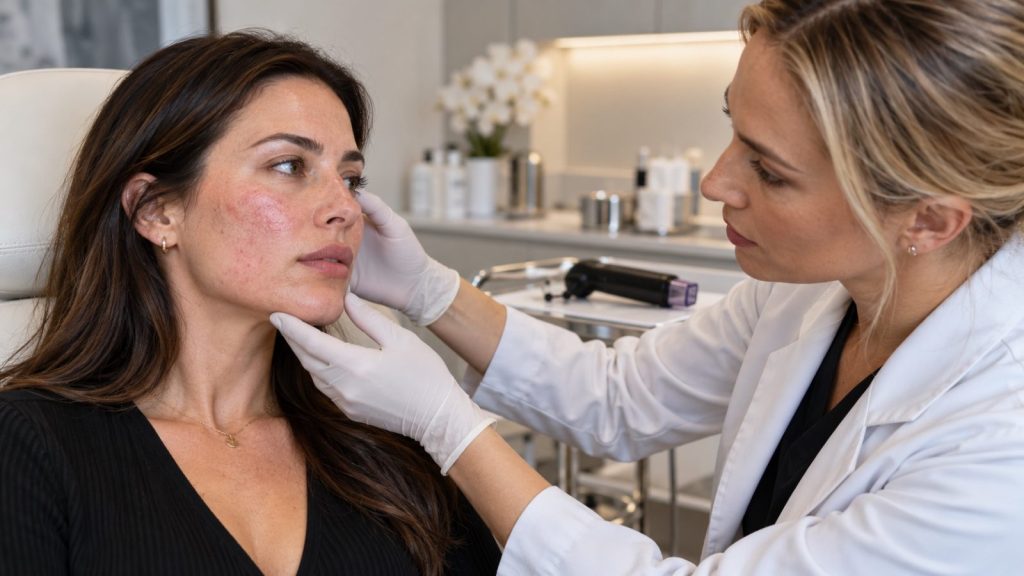
It is a medical aesthetic treatment that combines microneedling with radiofrequency energy. That means it creates controlled mechanical injury and delivers controlled heat beneath the skin. When used well, this can support collagen remodelling, skin tightening and improvement in texture.
When used poorly, too aggressively or in the wrong patient, problems can happen.
At DRV Clinic London, we see patients who are worried that Morpheus8 has gone wrong, whether the original treatment was carried out at our clinic or elsewhere. The first step is not panic. It is diagnosis.
Not every red mark is a burn.
Not every hollow is fat loss.
Not every grid mark is permanent damage.
But some symptoms do need proper assessment.
What Is Morpheus8?
Morpheus8 is a form of radiofrequency microneedling, often called RF microneedling.
The treatment uses small needles to enter the skin at selected depths. Radiofrequency energy is then delivered into the tissue, creating heat at controlled levels. This heat is intended to stimulate tissue remodelling, collagen production and, depending on settings and area, contraction or contour-related changes.
That is why treatment planning matters.
The face is not one uniform surface. The forehead, under-eyes, cheeks, jawline, neck and lower face all have different skin thickness, fat distribution, vascularity and risk profiles.
A safe treatment plan should respect anatomy.
Can Morpheus8 Go Wrong?
Yes, Morpheus8 complications and unwanted results can occur.
Most patients experience expected short-term effects such as redness, swelling, tenderness, dryness, small treatment marks or mild crusting. These usually improve as the skin heals.
However, some patients experience more concerning changes, including:
- prolonged redness
- burns
- blistering
- delayed wound healing
- persistent grid marks
- post-inflammatory hyperpigmentation
- hypopigmentation
- infection
- scarring
- prolonged sensitivity or pain
- unwanted texture changes
- facial volume change
- suspected fat loss
- nerve-related symptoms
The important point is that these are not all the same problem.
A burn, pigmentation, infection, scar and volume-loss concern each need a different assessment.
What Are Normal Side Effects After Morpheus8?
Some short-term side effects can be expected after RF microneedling.
These may include:
- redness
- swelling
- warmth
- tenderness
- small pin-point marks
- dryness
- tightness
- mild crusting
- temporary rough texture
- sensitivity when applying skincare
The intensity depends on the treatment area, settings, number of passes, skin type, healing response and aftercare.
A patient treated gently for mild texture may recover very differently from a patient treated more aggressively for laxity, scarring or contouring.
When Should You Be More Concerned?
You should seek professional assessment if symptoms are severe, worsening or not following the expected recovery pattern.
Concerning signs may include increasing pain rather than gradual improvement, blistering, open wounds, yellow crusting or discharge, spreading redness, heat and swelling suggesting possible infection, persistent grid marks, darkening pigmentation, pale or lighter patches, visible scarring, new facial hollowing, asymmetry, numbness, weakness or unusual nerve symptoms, or any rapidly worsening skin change.
If there are signs of infection, severe pain, open wounds or neurological symptoms, do not wait for a routine beauty appointment. Seek appropriate medical assessment.
Morpheus8 Burns
Because Morpheus8 uses radiofrequency heat, excessive energy or unsuitable settings can potentially cause thermal injury.
A burn may be suspected when there is unusually severe pain, blistering, open skin, pronounced crusting, delayed healing, persistent redness, later pigmentation, texture change or scarring.
Not all redness after Morpheus8 is a burn. Redness can be part of normal recovery.
The difference is usually the severity, progression, pain level, healing pattern and what happens over the following days.
A suspected burn should be assessed rather than covered with more treatments. The wrong intervention at the wrong time can make recovery more difficult.
Morpheus8 Grid Marks
Temporary grid marks can occur because the treatment tip has a patterned arrangement of microneedles.
In many patients, these marks settle as the skin heals.
Persistent grid marks are different.
They may relate to prolonged inflammation, post-inflammatory pigmentation, excessive treatment intensity, delayed healing, needle-track pigmentation, textural injury or early scar change.
This is especially important in patients with darker Fitzpatrick skin types or a history of pigmentation after inflammation.
The correct management depends on what the marks actually represent. Treating pigmentation as though it were a scar, or a scar as though it were simple pigmentation, can lead to poor decisions.
Hyperpigmentation After Morpheus8
Post-inflammatory hyperpigmentation, or PIH, can occur when inflammation triggers excess pigment production.
After Morpheus8, pigmentation may appear as brown patches, darker dots at needle-entry points, grid-shaped pigmentation, uneven dark areas or worsening pigmentation after sun exposure.
Patients with darker skin tones may be more vulnerable to pigmentation after energy-based treatments, particularly if treatment is too aggressive or aftercare is poor.
Sun protection is not optional after RF microneedling. UV exposure can worsen pigmentation and prolong recovery.
Hypopigmentation After Morpheus8
Hypopigmentation means areas of skin become lighter than the surrounding skin.
This can be more difficult to treat than dark pigmentation, depending on cause and severity. Pale marks may relate to deeper inflammation, thermal injury or disruption in pigment-producing cells.
A proper assessment is important before attempting correction.
Scarring After Morpheus8
Scarring is uncommon but possible.
Risk may increase when there has been excessive heat, aggressive depth or energy, infection, delayed healing, picking or trauma during recovery, poor aftercare, treatment over unsuitable skin or a personal tendency to abnormal scarring.
Scars should not be treated impulsively. Their age, thickness, colour, texture and stability matter. Some scars need time before further procedures are considered.
Infection After Morpheus8
Any treatment that creates skin entry points carries infection risk.
Warning signs may include increasing redness, worsening pain, heat, swelling, pus or discharge, yellow crusting, fever, feeling unwell or rapidly worsening inflammation.
Infection requires medical assessment. It should not be managed through online advice or repeated cosmetic treatments.
Can Morpheus8 Cause Fat Loss?
This is one of the most worrying searches patients make.
Morpheus8 and other RF microneedling treatments can affect different tissue depths depending on needle depth, energy, pulse duration, number of passes and anatomical area. If energy reaches deeper tissues, unwanted effects on subcutaneous fat may be possible.
This does not mean every apparent volume change after treatment is true fat loss.
Facial volume can look different because of swelling resolving, weight change, lighting, photography, dehydration, natural ageing, pre-existing asymmetry, changes in skin tightness or actual fat-volume alteration.
If you are specifically worried about hollowing, cheek flattening or an older-looking appearance after treatment, this deserves a separate assessment. We would treat this as a distinct concern from surface pigmentation or skin texture.
Read the separate guide: Morpheus8 Fat Loss: Can RF Microneedling Cause Facial Hollowing?
Can Morpheus8 Damage Nerves?
Nerve-related symptoms are uncommon, but they should be taken seriously.
Patients should seek medical assessment if they experience new weakness, significant numbness, altered sensation, facial asymmetry affecting movement, persistent nerve-type pain or symptoms that are worsening rather than improving.
Nerve symptoms after an aesthetic treatment should not be dismissed as normal downtime.
Why Do Some Morpheus8 Complications Happen?
Complications can have several causes.
These may include inappropriate treatment depth, excessive energy, too many passes, poor patient selection, treating thin areas too aggressively, inadequate consideration of skin type, treatment over inflamed or unsuitable skin, poor aftercare, infection, previous aesthetic treatments affecting the tissue and individual healing response.
Morpheus8 is not simply a machine treatment.
The device matters, but the person operating it matters too.
Settings should be selected according to anatomy, skin quality, treatment objective and risk profile. The same settings should not automatically be used across the entire face.
What Should You Do If You Think Morpheus8 Has Gone Wrong?
First, do not panic.
Second, do not rush into another aggressive treatment.
The skin can look worse during the inflammatory and healing phase before it improves. However, waiting is not always the right answer either. The decision depends on symptoms.
A sensible next step is to gather information: date of treatment, clinic or practitioner details, areas treated, device used, depth and energy settings if available, number of passes, before-treatment photographs, photographs during recovery, products used afterwards, any medication already prescribed, when symptoms started and whether symptoms are improving or worsening.
If you can, request your treatment records from the clinic that performed the procedure.
This helps reconstruct the timeline.
Should You Have More Morpheus8 to Fix a Bad Result?
Not automatically.
If the issue is inflammation, burns, delayed healing, pigmentation, scarring or suspected fat loss, adding more heat before diagnosis may worsen the problem.
This is one of the most important principles in complication management:
Do not treat before understanding.
The right answer may be observation, medical treatment, skincare, pigmentation management, scar management, volume assessment, referral or simply time.
But the wrong answer is guessing.
How DRV Clinic Assesses Morpheus8 Complications
At DRV Clinic London, a complication assessment begins with the clinical story.
We look at what treatment was performed, where it was performed, when symptoms started, how symptoms changed, what the skin looked like before treatment, what treatments were performed afterwards, skin type and pigmentation risk, previous energy-based treatments, previous fillers or biostimulators, facial volume and anatomy, and whether the problem is surface-level, structural, inflammatory or neurological.
The aim is not to blame another clinic.
Complications can occur even when procedures are performed carefully. The priority is to understand the current problem and decide what is safest now.
For wider treatment concerns, see our Aesthetic Complications & Corrections London page.
Can Morpheus8 Complications Be Corrected?
Sometimes, yes.
But there is no universal “Morpheus8 reversal”.
Management depends on what has happened.
Pigmentation is managed differently from scarring. Scarring is managed differently from infection.